
You can’t see or smell carbon monoxide, but you can stop it from putting your family at risk
What is carbon monoxide?
Carbon monoxide is a poisonous gas created when fuel such as gas, oil, wood or coal does not burn properly. It is often called the silent killer because you will not know it is there until you start to feel unwell.
Signs to Look Out For
In your home:
- Yellow or orange flames on gas appliances instead of clear blue
- Soot or brown stains around cookers, fires or boilers
- Pilot lights that blow out often
- Extra condensation on windows
In your body:
- Headache, dizziness or confusion
- Feeling weak, sick or short of breath
- Collapse or loss of consciousness
- If more than one person feels unwell at the same time, especially when the heating or cooker is on, get outside straight away.
What to do
If you ever think Carbon Monoxide might be present, act quickly and do not wait for symptoms to get worse.
- Open all windows and doors to let in fresh air
- Leave the property immediately
- Seek urgent medical help
- Call the National Gas Emergency Service on 0800 111 999
The National Gas Emergency Service is free and available at any time, day or night, all year round.
How to stay safe
If you ever think Carbon Monoxide might be present, act quickly and do not wait for symptoms to get worse.
- Have your boiler and gas appliances serviced every year by a Gas Safe registered engineer
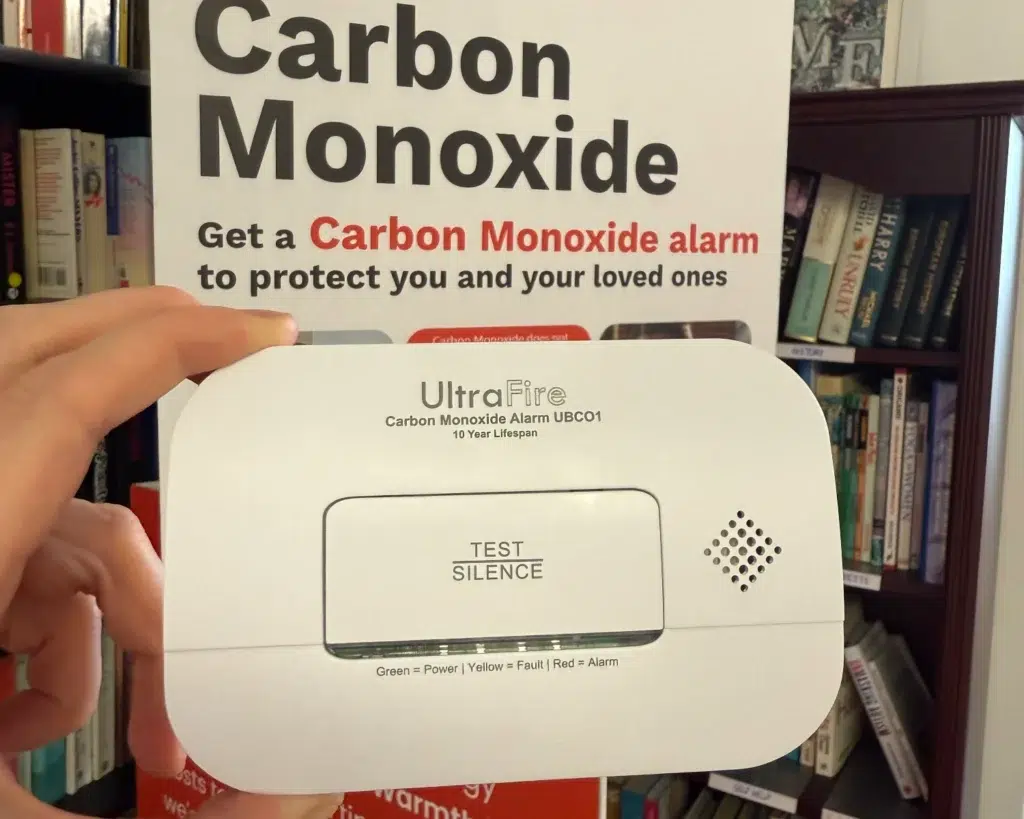
- Install a Carbon Monoxide alarm in every room with a gas appliance and test it monthly
- Replace alarms that are more than ten years old
- Keep vents and flues clear
If you are not sure where to get an alarm, our team can show you examples and help you choose one that suits your home.
Carbon Monoxide Alarms
A carbon monoxide alarm is the easiest and most reliable way to protect your home. It will alert you as soon as carbon monoxide is detected, giving you time to act before anyone feels unwell.
You should have an alarm in every room with a fuel burning appliance such as a boiler, gas fire or cooker. Test it once a month by pressing the button and replace it if it is more than ten years old.
Carbon Monoxide PDF
Download our Carbon Monoxide PDF for reminders of the symptoms, what to do and how to prevent Carbon Monoxide in your home.
Quick Safety Survey
Take a moment to fill in the Carbon Monoxide Awareness Survey.
When asked, please enter partner code 049 JG87KCV2 so your response links with The Hope Foundation.
Frequently Asked Questions
It is normal to have questions about carbon monoxide safety. These simple answers might help.
Can I smell or see carbon monoxide?
No. You cannot see, smell or taste it, which is why alarms are so important.
How often should I check my alarm?
Press the test button once a month and replace it if it is more than ten years old.
Where should I put the alarm?
In each room with a gas appliance, around one to three metres from the source and at head height.
Who should service my boiler?
Always use a Gas Safe registered engineer. You can check at www.gassaferegister.co.uk.
Is it better to leave the heating on low all the time?
No. It costs less to heat your home only when you need it. Using a timer or thermostat is the best way to keep your home warm and save energy.